
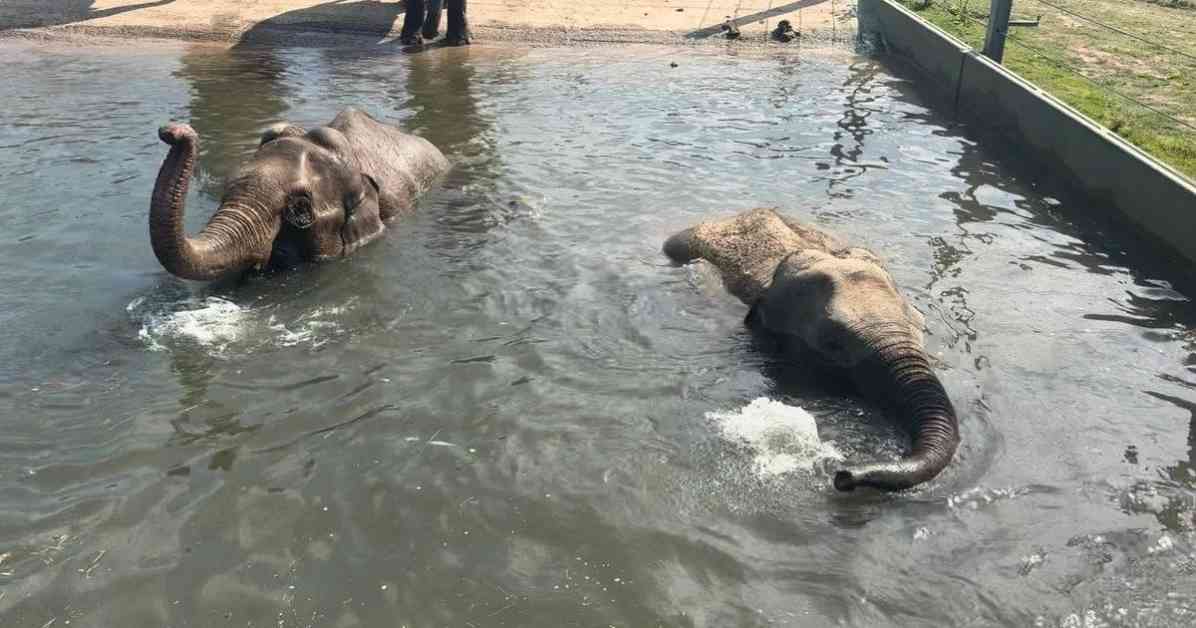
Blackpool Zoo recently experienced a heartbreaking loss with the passing of two baby Asian elephants this autumn. The zoo staff shared that one of the babies tragically died in the womb, while the other passed away after birth when its mother was unable to feed it. Noorjahan and Esha, a mother and daughter duo who had been at the zoo since 2018, were the elephants who faced this tragedy. The staff had been excited earlier in the year when they announced the elephants’ pregnancies as part of their efforts to conserve and breed the endangered Asian Elephant species.
Noorjahan went into labor in September and sadly delivered a calf that did not fully develop and had already passed away in the womb. Esha, on the other hand, gave birth in early November after a full-term pregnancy. Despite the efforts of the staff to care for the newborn calf, Esha was not allowing it to suckle, making it challenging for the calf to thrive. The herd also prevented zookeepers from approaching the calf for the first 24 hours, adding to the challenges faced by the staff.
The team at Blackpool Zoo worked tirelessly to provide round-the-clock care for the calf, sourcing feed from Esha and plasma from Noorjahan. However, the calf began experiencing seizures a few days after birth and unfortunately passed away on November 7. A post-mortem examination revealed that the calf had developed an infection due to missing essential nutrients and vitamins from colostrum in its early hours.
Adam Kenyon from the zoo expressed gratitude for the dedication and commitment shown by the staff in trying to save the calf. He highlighted the close relationships developed between the elephant care team and the elephants, emphasizing the extraordinary level of care provided at Blackpool Zoo. The zoo is continuing to monitor the elephants closely, as they are known to mourn the loss of their young.
Asian elephants have been facing a population decline, leading to their classification as endangered since 1986. In response to this, Blackpool Zoo has launched Project Elephant, focusing on the long-term management, breeding, and welfare of its elephants. The zoo has made significant investments in facilities, including the UK’s largest indoor elephant house and multiple outdoor habitats designed to meet the complex needs of Asian elephants.
The loss of the two baby elephants has undoubtedly been a difficult time for the staff at Blackpool Zoo, but their unwavering dedication to the care and conservation of these majestic animals remains a priority. As they continue to mourn the loss, the zoo hopes for the public’s understanding and support during this challenging period.