



Public Transport vs Driving in Manchester: What to Weigh
Compare public transport and driving around Manchester by door-to-door time, cost, access and environmental impact, then match the choice to your trip.

For many journeys around Manchester, public transport is a practical choice when destinations are near a stop or station and you want to avoid parking. Driving can be more convenient for trips with several stops, bulky items or limited public transport links. Compare the full journey, including waiting, walking, parking and the needs of everyone travelling.
There is no single winner for every route or time of day. A short trip into central Manchester may favour public transport, while a journey between places with sparse connections may be easier by car. Checking both options for the specific trip helps reveal the trade-offs.
The comparison below covers door-to-door time, different journey types and costs beyond a fare or fuel. It also considers access and environmental impact, so you can choose an option that fits the journey rather than relying on a general rule.
- Compare door-to-door time, including walking, waiting, transfers and parking.
- Public transport may suit direct trips into central Manchester; driving can help with multiple stops, bulky items or limited connections.
- Check current services, fares, road conditions and parking for the time you plan to travel.
- Choose around the people travelling, access needs, total cost and environmental impact.
What public transport and driving involve
The parts of a transit journey
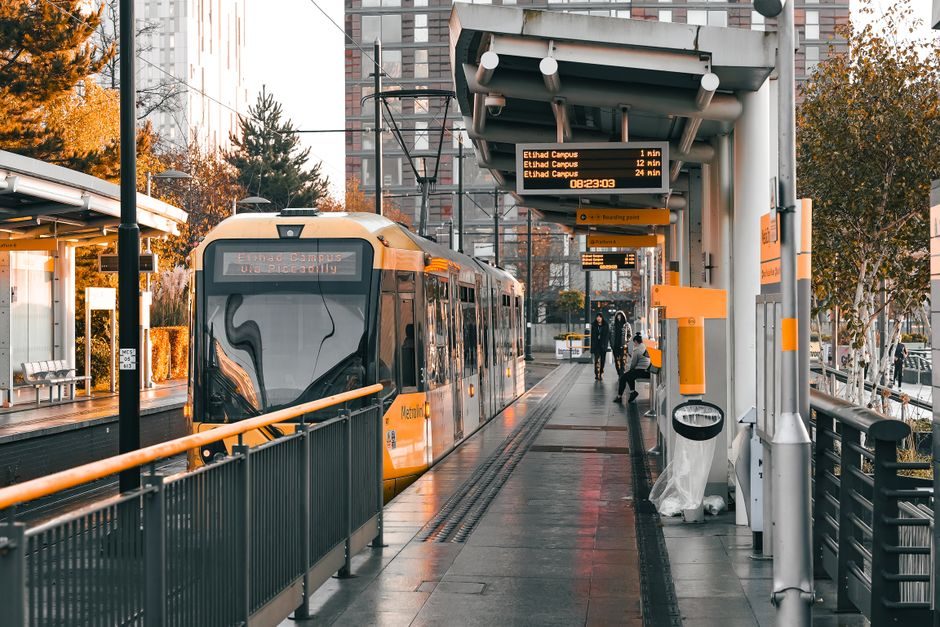
Public transport means using services such as buses, trams and trains, often alongside a walk at either end. A journey may involve waiting, changing services or checking whether the final stop is close enough to your destination. For trips into central Manchester, the Metrolink and bus network can take you near many destinations without needing a parking space.
The journey depends on the whole chain, not just the time spent on the vehicle. Allow for getting to a stop, waiting for the service and walking from the stop to the door. If a connection is necessary, consider the time and effort of changing, especially when travelling with children, luggage or mobility aids.
Public transport can let you read, rest or avoid concentrating on traffic, but it offers less control over departure and route than a car. Service changes, disruption and crowding can affect the experience, so check current travel information before setting off. The best comparison uses the actual services available for your intended time and destination.
What driving adds
Driving gives you a direct way to carry people and belongings, and it can make several stops easier to combine. The car journey does not begin at the road, however: you may need to reach the vehicle, find a suitable place to park and walk from there. Congestion can also make a short distance take longer than expected.
A car can be especially useful when the start or destination is poorly served, or when travel needs make walking and changing services difficult. It is less straightforward when you have to park near a busy destination. Check parking rules and availability for the area, and allow time to reach your final door from the space.
Remember that the driver must focus on the road and cannot use travel time as freely as a passenger can. Driving also makes the journey dependent on road conditions and on having a vehicle available. For some trips, combining modes—such as driving to a station and continuing by train or tram—can address a weak link.
How to compare a journey from door to door
Count every stage
Compare the time from leaving your starting door to reaching the destination door, rather than comparing driving time with time aboard a bus or tram. Include the walk to a stop, waiting, transfers and the walk at the far end. For driving, include finding a parking space and walking from it to the destination.
Check the options for the time you will actually travel, because services and road conditions can vary through the day. A route that looks simple on a map may involve a long walk or an awkward change. Use current journey information, then allow a sensible margin if arriving on time matters.
The return trip may not mirror the outward journey. A late finish, a different destination or carrying shopping can change which option is practical. Compare both directions separately and consider whether you can make the return using the same service, parking arrangement or onward connection.
- Start at the door, not the stop or car park.
- Include waiting, changes and final walking time.
- Check both the outward and return journeys.
- Allow for the time you need to arrive.
Weigh reliability and access
A useful comparison includes how predictable the journey feels, not only its fastest possible time. Traffic can slow a drive, while disruption or a missed connection can affect public transport. Check travel updates close to departure and think about which type of delay would cause the greater problem for your plans.
Access needs can change the answer. Consider the distance to stops, step-free access where available, the ease of boarding and whether you can manage the walk at the other end. For driving, account for where you can park and how far that space is from the entrance.
Some residents use a journey planner to compare options, but check its assumptions against your own circumstances. It may not reflect the time needed to walk slowly, manage a pushchair or carry heavy items. If timing is important, compare realistic door-to-door plans and choose the option with a workable margin.
Which travel option suits different trips
Match the mode to the trip
Public transport can suit a direct trip into central Manchester when a stop or station is close to both ends. It may also be a sensible choice when parking would add hassle, or when you prefer not to drive in busy traffic. Check the service and the walk before assuming the route is convenient.
- Choosing from habit; compare the actual journey.
- Assuming a nearby stop means a short door-to-door trip; check both walks.
- Treating a car as automatically faster; include traffic and parking.
Driving can work better when you need to visit several places, travel with bulky items or reach an area with limited services. It may also help when a group is travelling together, though the driver still needs to manage traffic and parking. Compare the combined journey rather than treating each stop as a separate trip.
For journeys between Greater Manchester districts, the best option depends on the specific connections and road conditions. One place may be easy to reach by a direct service, while another may require a change and a long walk. Check the route at the time you plan to travel, and reassess if your destination or schedule changes.
| Trip situation | Public transport | Driving |
|---|---|---|
| Direct journey into central Manchester | Can avoid parking; check service and walking time | Offers flexibility; allow for traffic and parking |
| Several stops in one outing | Check connections between each destination | Can make carrying items and combining stops easier |
| Destination with limited services | May involve a change or a longer walk | May offer more direct access; check parking |
| Group travelling together | Count fares for everyone | Compare shared journey costs and available space |
Consider people and purpose
The people travelling can matter as much as the route. A passenger who can walk comfortably may find a change straightforward, while someone carrying a buggy, using a mobility aid or managing fatigue may need fewer transfers and shorter walks. Check access details for the services and places involved before deciding.
For a journey with children, luggage or shopping, compare the effort of carrying items on public transport with the work of driving and parking. A car can simplify carrying, but it does not remove the need to park near the destination. For a single light trip, public transport may avoid that extra task.
Think about what happens if plans shift. A fixed appointment may call for a route with a reliable arrival margin, while a flexible outing may allow more choice. If you are travelling with others, agree the meeting point and return plan in advance, especially where the group could split between different modes.
The price of a public transport ticket is only one part of the comparison.
Costs to consider beyond the ticket or fuel

Add the full trip costs
The price of a public transport ticket is only one part of the comparison. Consider any additional fares for connections, the cost of getting to the stop and whether each traveller needs a separate ticket. Check current fares and ticket conditions rather than relying on an old estimate or assuming one ticket covers every stage.
- ☐ Check fares for every traveller.
- ☐ Include connecting journeys and access costs.
- ☐ Add likely parking costs to the driving option.
- ☐ Compare the full return journey.
Fuel is also only one cost of driving. Depending on the trip, you may face parking charges and other expenses associated with using a car, while the exact running cost depends on the vehicle and journey. For a fair comparison, include costs that apply to this particular outing rather than treating fuel as the whole bill.
The number of people travelling can change the total. One driver may find a car costly for a short solo journey, while a group may compare shared driving costs with fares for everyone. Do the calculation for the actual party size and return journey, and include any parking or transfers likely to be needed.
- Check the current fare and ticket conditions.
- Count every traveller and journey leg.
- Include parking and any onward travel.
- Compare the return trip, not only one way.
Account for wider impacts
Environmental impact is another factor, but it depends on the trip and how the vehicle or service is used. A car carrying several people is different from a solo drive, while public transport can involve walking or a connecting ride at either end. Avoid treating either mode as automatically better for every journey.
Driving can also mean spending time looking for parking, even when the vehicle journey itself is short. Public transport may save that effort but require extra walking or waiting. Those demands have practical value: consider your available time, energy and access needs alongside the money you spend.
A mixed journey can be a useful compromise when neither option works well from door to door. You might drive to a suitable public transport connection, or use a bus or tram for one part and walk the rest. Check the transfers and any parking arrangements before setting off, so the change of mode does not create a new difficulty.
How access and convenience affect your choice
Getting to the first stop
Check how easily you can reach a stop or station before deciding that public transport is convenient. A short walk may be manageable in good weather but difficult with luggage, mobility needs or a pushchair. Driving can make the start simpler, although parking near the destination may add another leg to the journey.
- Compare walking distance at both ends of the trip.
- Include parking access and the walk from the car.
- Check step-free access when it affects your journey.
For a trip across Greater Manchester, compare the walk at both ends, not just the distance between departure and arrival. A station near work may still leave a long walk to the office, while a bus stop close to home may not be close to your final destination. Consider the full route on foot.
A Manchester-area operator comparing how agencies serve businesses in different regions may find Leicester Seo Services an example of a location-specific service page. For your own journey, check whether stops, platforms and entrances are step-free where that matters. If the information is unclear, allow extra time or choose an option with easier access.
Flexibility around daily plans
Driving can be more convenient when plans include several stops, bulky items or a late return. You control when to leave and can change the order of errands, but that flexibility depends on finding suitable parking at each destination. A car may be less useful if traffic or parking restrictions make stops unpredictable.
Public transport can suit journeys with a clear destination and a workable service, particularly when you can avoid parking near busy centres. It may require more planning if you need to change services or travel outside familiar areas. Keep a little flexibility in your schedule when connections or walking time matter.
Think about the whole day rather than judging one leg in isolation. A passenger may find a direct outward trip easy but struggle to carry shopping home, while a driver may prefer the car for several errands yet use public transport for a single city-centre visit. Choose according to the demands of that specific day.
Check local transport information before setting off
Verify service and access details
Check the relevant operator’s service updates before leaving, then confirm that the information applies to your travel time and direction. Planned works, disruption and temporary changes can affect a journey differently depending on where you board. Do not assume that a familiar service is running normally simply because it operated as expected last time.
- Open the relevant operator’s current service information.
- Check notices for your planned direction and time.
- Confirm access or stop changes at both ends.
- Choose a backup if disruption affects the journey.
Use official operator or transport information for current service notices, and check again if your plans are time-sensitive. Look for details about disruptions, replacement arrangements and access changes rather than relying only on a general journey estimate. When several services are involved, confirm each part of the trip before setting out.
When checking a local transport provider’s online service details and location information, Local Seo Services can help businesses keep those details consistent. For passengers, the practical step is to compare the provider’s current notice with your planned stop and destination. If a key detail is missing, contact the provider or build an alternative into your plan.
- Check the date and direction of any service notice.
- Confirm changes at both boarding and arrival points.
- Recheck before departure if timing is important.
- Plan an alternative when a key connection is disrupted.
Plan for changes on the day
Allow time for the parts of a journey that can change, such as a walk to a different stop or a wait for a replacement service. A journey planner is a useful starting point, but it cannot remove the need to read disruption notices. Keep your destination and an alternative route in mind.
If you are driving, check local travel and parking information as well as the route itself. Roadworks, event traffic and restricted access can alter how close you can get to your destination. Make sure any parking option is appropriate for the time you expect to arrive, rather than relying on a previous visit.
For either mode, save essential details before you set off if you may have limited signal or battery. That might mean noting a stop name, parking location or service change, not downloading every possible route. A simple fallback—such as waiting at a known stop or choosing a different car park—can prevent a small disruption becoming a rushed decision.
When online details about a provider need checking
Check service claims carefully
Before relying on a transport provider’s online information, check that it clearly identifies the service, areas covered and any limits that affect your journey. A broad claim about serving Manchester does not necessarily mean a particular stop or destination is included. Compare the provider’s details with the actual places you need to travel between.
Look for practical details such as operating areas, accessibility information, booking requirements and ways to ask a question. If pages conflict, treat the more specific current notice as a prompt to verify rather than assuming either page is correct. This matters especially when a journey depends on a service outside the main public transport network.
Transport businesses looking to help customers find their services online can use Seo Services to explore broader search and digital marketing support. For a passenger, online visibility is not proof that a provider suits a particular trip. Confirm the service area, terms and availability directly before building an important journey around it.
Confirm who provides the service
Identify who operates a service before relying on details copied across websites or directories. A listing may be out of date, incomplete or about a different provider with a similar name. Use the provider’s own current information to confirm the service and follow its instructions for booking or travel.
When a journey is essential, check whether the provider explains how to report a problem and what to do if the service changes. Keep a record of the relevant confirmation if you have arranged a booking. If information remains unclear, ask a direct question before leaving rather than trying to resolve it at the roadside or stop.
These checks apply to information about specialist transport as well as familiar public services. Do not assume that a service has the same operating hours, accessibility or payment arrangements as a bus or tram. Verify the details that affect your own needs, then compare the confirmed option with driving or another available way to travel.
Common assumptions that can lead to a poor choice

Question easy comparisons
A journey that looks shorter on a map is not automatically the quicker choice. Driving time may exclude finding parking and walking to the destination, while a public transport estimate may omit the time to reach a stop or wait for a service. Compare realistic door-to-door time for the same departure period.
Nor is the cheapest-looking option always the least expensive overall. A car journey can involve parking and other trip costs, while public transport costs may depend on how many people are travelling and what tickets or passes they already hold. Work from the costs that actually apply to your outing, rather than a general rule.
One trip also cannot establish which mode is best for every Manchester journey. A car may be useful for carrying equipment or reaching several places, while public transport may suit a direct trip where parking is inconvenient. Decide again when the time, destination, passengers or purpose changes.
Account for changing conditions
Traffic and service conditions can change, so a journey that worked well yesterday may not suit today. Before setting off, check for relevant disruption and consider whether your arrival time is fixed. If it is, leave room for the part of the trip least within your control.
Avoid assuming that public transport is always easier in the centre or that driving is always more convenient outside it. Access, parking, service availability and the distance from a stop to the destination can reverse that judgement. Assess the actual places involved, including the route from your door and the final approach.
A practical choice is often a balance rather than a winner. You might drive to make a multi-stop day manageable, then use public transport for a separate visit where parking would be awkward. Before committing, ask what you need to carry, how flexible your timing is and what would happen if the preferred option changed.
Frequently asked questions
How can I compare travel time fairly?Compare the full journey from your starting point to the place you need to reach. Include walking to a stop, waiting, transfers and the final walk for public transport; for driving, include access to the car, likely traffic, parking and the walk from the parking place. Use the same departure time and allow for any uncertainty that could affect a fixed appointment.
What should I check before taking public transport in Greater Manchester?Check current service information for the operator, direction and time you plan to travel. Look for disruption, temporary stop or access changes, and any replacement arrangements. If your trip involves more than one service, verify each leg and consider a backup. For journeys where step-free access matters, confirm that the relevant stops and stations meet your needs.
When might driving be the more practical option?Driving may be more practical when you need to carry bulky items, make several stops or reach a destination that is difficult to access from public transport. It still depends on traffic, parking and the distance from the car to your destination. Compare those details with the complete public transport journey instead of assuming a car will save time.
How should I compare the cost of each option?List the costs that apply to the particular trip rather than comparing fuel with a ticket alone. For driving, consider parking and other journey-related expenses; for public transport, consider the fares or passes relevant to the travellers. The number of passengers, the length of the outing and whether you already hold a pass can change which option makes more sense.
Make the choice fit the journey
For Manchester-area travel, compare door-to-door time, access, current service information and the costs that apply to your trip. Public transport may work well for a direct journey when stops are convenient; driving may suit several errands, bulky loads or a destination that is hard to reach otherwise. Neither is automatically quicker, cheaper or easier across every journey.
Before your next trip, write down the destination, timing and anything you need to carry, then check the relevant service or road information. Include the walk and parking in your comparison, and choose a workable backup if disruption or delay would matter. That brief check gives you a decision based on the day’s real needs, not a general rule.

Add Manchester News as a preferred source on Google


