
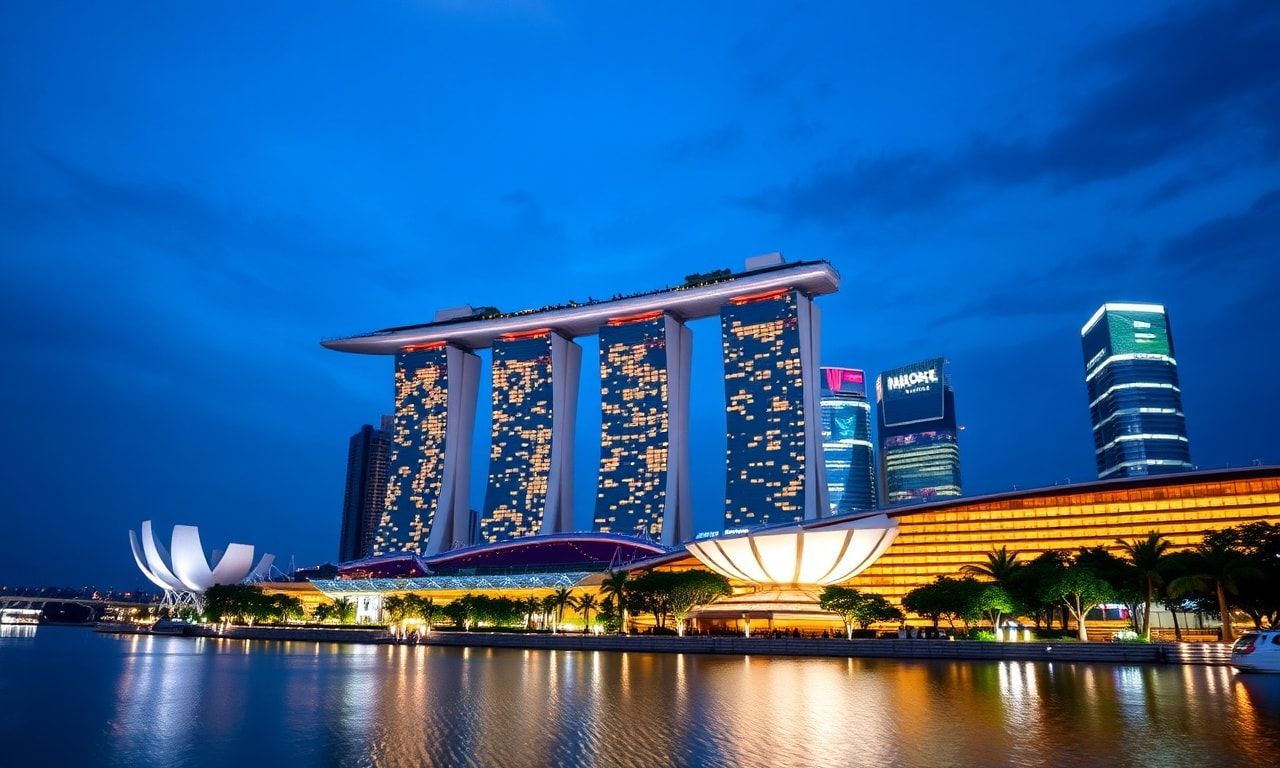
The Evolution of Singapore’s Financial Landscape
Singapore has emerged as a formidable player in the global financial arena, transforming from a modest trading post to a bustling metropolis that rivals the likes of New York and London. This evolution has been driven by a combination of strategic government policies, a robust regulatory framework, and a commitment to innovation. The city-state’s journey to becoming a financial powerhouse is a testament to its adaptability and forward-thinking approach.
In the early 1960s, Singapore’s economy was largely agrarian, with a significant portion of its population engaged in farming and fishing. However, the visionary leadership of then-Prime Minister Lee Kuan Yew set the stage for a dramatic shift. Recognizing the potential of a services-driven economy, Lee embarked on a series of reforms that would lay the groundwork for Singapore’s financial sector.
One of the key milestones in this journey was the establishment of the Monetary Authority of Singapore (MAS) in 1971. The MAS was tasked with overseeing the country’s monetary policy and regulating its financial institutions. This move was crucial in instilling confidence among international investors and paving the way for Singapore to attract significant foreign capital.
The Role of Government Policies
The Singaporean government has played a pivotal role in shaping the country’s financial landscape. Through a series of well-crafted policies, the government has managed to create an environment that is conducive to business growth and innovation. One of the most notable policies is the introduction of the Global Investor Programme (GIP), which offers residency to high net worth individuals who are willing to invest in Singapore.
In addition to the GIP, the government has also implemented a range of tax incentives and grants aimed at attracting foreign investment. These incentives have been particularly effective in luring multinational corporations and financial institutions to set up shop in Singapore. The government’s commitment to maintaining a business-friendly environment has been a key factor in the city-state’s rise as a global financial hub.
Another significant policy initiative is the establishment of the Singapore Exchange (SGX). The SGX is one of the world’s leading stock exchanges, offering a wide range of financial products and services. The exchange’s robust regulatory framework and advanced trading infrastructure have made it a preferred destination for investors looking to tap into the Asian markets.
Attracting International Talent
Singapore’s success as a financial hub can also be attributed to its ability to attract top talent from around the world. The city-state’s multicultural society, high standard of living, and excellent educational institutions have made it an attractive destination for professionals in the financial sector.
The government has further enhanced its appeal by offering a range of visa options for skilled foreign workers. These visa options, combined with the city-state’s competitive salaries and tax benefits, have made Singapore a magnet for financial talent. This influx of skilled professionals has been instrumental in driving innovation and growth in the financial sector.
The Impact of Technology and Innovation
Singapore’s commitment to embracing technology and innovation has been a key driver of its success as a financial hub. The city-state has made significant investments in developing its digital infrastructure, which has enabled financial institutions to offer cutting-edge services to their clients. One of the most notable developments in this area is the establishment of the Singapore FinTech Festival, which brings together industry leaders, innovators, and policymakers to discuss the latest trends and developments in the fintech space.
In addition to the FinTech Festival, Singapore has also launched a range of initiatives aimed at promoting innovation in the financial sector. These initiatives include the establishment of the FinTech Innovation Lab, which provides a platform for startups to develop and test their products, and the introduction of the Sandbox, which allows financial institutions to experiment with new technologies in a controlled environment.
Singapore’s commitment to innovation has also been evident in its approach to regulatory matters. The MAS has been proactive in adopting new technologies and has worked closely with industry players to develop a regulatory framework that is conducive to innovation. This approach has been crucial in enabling financial institutions to leverage technology to offer better services to their clients.
Interesting Facts and Insights
For those looking to delve deeper into the fascinating world of Singapore’s financial sector, the interesting facts knowledge guide offers a wealth of information. This comprehensive resource provides insights into the city-state’s financial landscape, including its regulatory framework, key players, and emerging trends. Whether you are a seasoned professional or a curious enthusiast, this guide is an invaluable resource for anyone looking to understand the dynamics of Singapore’s financial sector.
The Future of Singapore’s Financial Sector
As Singapore continues to evolve as a global financial hub, the future looks bright for the city-state’s financial sector. The government’s commitment to maintaining a business-friendly environment, coupled with its focus on innovation and technology, is expected to drive further growth and development in the sector. Additionally, Singapore’s strategic location and strong regulatory framework make it an ideal gateway for investors looking to tap into the Asian markets.
In conclusion, Singapore’s rise as a global financial hub is a testament to its strategic vision, commitment to innovation, and ability to attract top talent. The city-state’s journey from a modest trading post to a bustling metropolis is a remarkable story of transformation and growth. As Singapore continues to evolve, it is poised to play an increasingly important role in the global financial landscape.
In our latest feature, we delve into the city’s ambitious environmental plans with Hong Kong’s push for sustainability, highlighting key policies and their potential impact.
Innovation in the face of adversity is a recurring theme in today’s global landscape, and Thailand’s local innovations offer a compelling case study.