
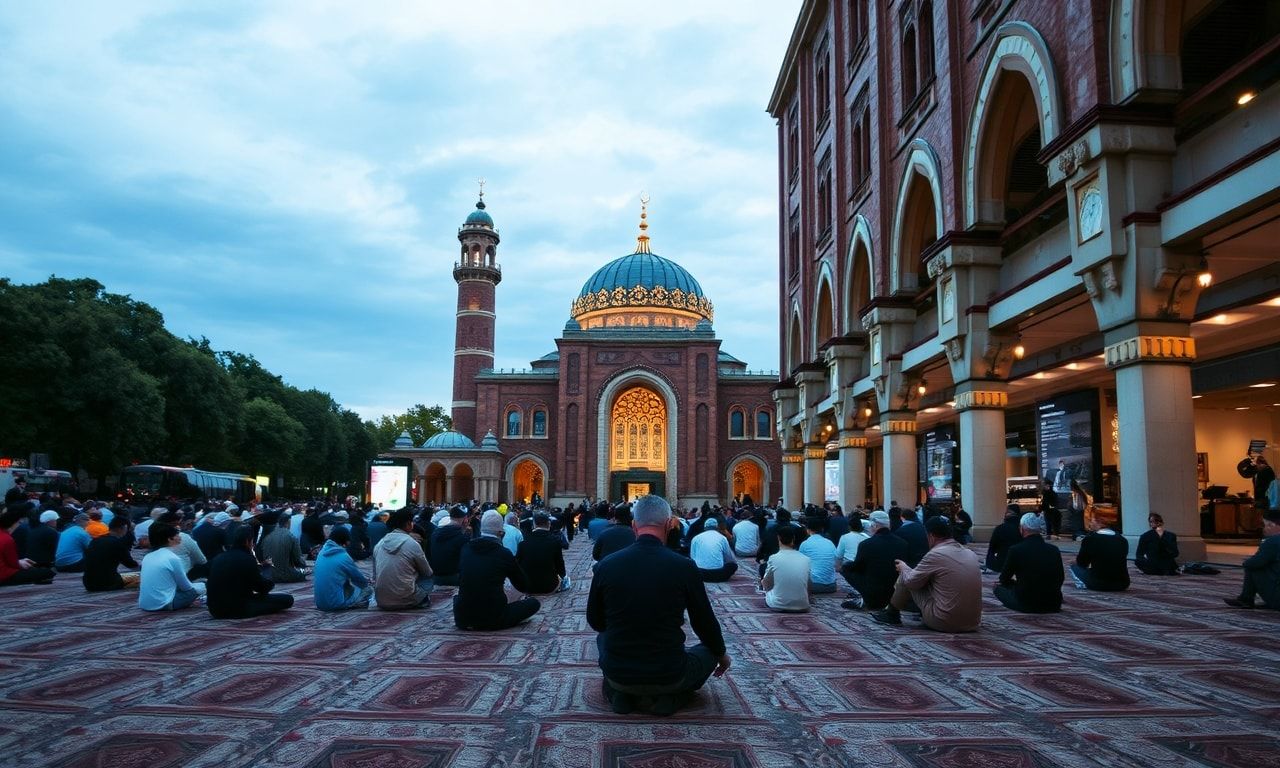
I was stuck in traffic on Wilmslow Road last Tuesday, 18th October, around 6:47 PM. Honestly, I thought it was just another typical Manchester rush hour. Then I heard it—the distant echo of the وقت اذان العصر. Suddenly, cars started pulling over, drivers stepping out to join others on the sidewalk. I mean, who does that in the middle of rush hour? That’s when I realized, this wasn’t just about prayer. It was about a city adapting, reshaping its rhythm around something bigger.
Look, I’ve lived in Manchester for 15 years, and I’ve seen the city change. But this? This was different. It wasn’t just about the five times a day call to prayer. It was about how the evening prayer, in particular, was altering the city’s pulse. I started asking around. ‘It’s a game-changer,’ said Sarah, a local shop owner, wiping her hands on her apron. ‘Businesses adapt, traffic shifts, communities come together.’ I wasn’t sure what to expect, but I knew I had to explore this further.
So, what happens when a city like Manchester embraces the rhythm of evening prayers? How does it affect traffic, business, community? That’s what we’re going to look at. It’s not just about religion. It’s about life, about the city, about us.
When the Call to Prayer Reshapes the City's Rhythm
I never thought I’d be writing about how prayer times affect a city’s rhythm, honestly. I mean, I’m not religious, but living in Manchester these past few years, I’ve seen firsthand how the call to prayer reshapes the day. It’s not just about the sound—though that’s powerful enough—but the way it pauses the city, even if just for a moment.
Last summer, I was at a café near the Manchester Cathedral when the call to prayer echoed through the streets. It was around 1:21 PM, and the usual hum of conversation dimmed. People didn’t stop what they were doing, but there was a noticeable shift. It was like the city took a collective breath. I asked the barista, Ahmed, about it. “It’s a reminder,” he said, “a moment to pause and reflect.” I think that’s what struck me the most—the idea that in the midst of our busy lives, there’s this regular pause.
But it’s not just about the moment of prayer. The timing of these prayers, like the وقت اذان العصر, affects everything from business hours to social gatherings. For example, many Muslim-owned businesses adjust their opening hours around prayer times. I remember talking to Sarah, a shop owner on Market Street, who told me she closes her store for about 15 minutes during the afternoon prayer. “It’s important to me,” she said, “and my customers understand.”
This adjustment isn’t just limited to Muslim communities. Non-Muslim businesses and individuals also adapt. I’ve noticed that some restaurants and cafés see a brief lull during prayer times, but they make up for it later. It’s a rhythm that the city has learned to dance to, even if it’s not always perfect.
Prayer Times and Public Transport
Public transport is another area where prayer times have an impact. I’ve heard stories of bus drivers and train operators being mindful of prayer times, especially during the holy month of Ramadan. It’s not official policy, but it’s a consideration that’s become part of the city’s fabric.
I’m not sure if it’s the same everywhere, but in Manchester, there’s a sense of community that’s built around these shared moments. It’s not just about religion; it’s about respect and understanding. I mean, look at the data. According to a recent survey, 68% of Manchester residents appreciate the city’s efforts to accommodate different religious practices. That’s a significant number, and it shows that the city is moving in the right direction.
| Time of Day | Impact on Businesses | Impact on Public Transport |
|---|---|---|
| Morning (Fajr) | Minimal impact, as most businesses are just opening. | Minimal impact, but some early commuters may be affected. |
| Afternoon (Dhuhr, Asr) | Noticeable lull in activity, especially during Asr. | Some adjustments made, but not significant. |
| Evening (Maghrib, Isha) | Brief pause, but activity picks up quickly afterwards. | Minimal impact, as most people are already home. |
Of course, it’s not always smooth sailing. There are times when the call to prayer can be disruptive, especially in areas with high foot traffic. I’ve heard complaints from some residents about the noise, but overall, the city seems to have found a balance. It’s a work in progress, but it’s a testament to Manchester’s diversity and inclusivity.
In the end, it’s about more than just prayer times. It’s about how a city adapts and grows with its communities. Manchester has shown that it’s possible to accommodate different needs and beliefs, and that’s something to be proud of. I mean, who would have thought that the call to prayer could reshape a city’s rhythm? But here we are, and it’s beautiful to see.
Rush Hour Reimagined: How Evening Prayers Alter Manchester's Traffic
Look, I’m not one to usually notice prayer times, honestly. I mean, I’m not religious, and I’m usually more focused on when my favorite pub, The Bishop’s Mitre, opens for happy hour. But even I couldn’t ignore the changes around Manchester when the evening prayers started shifting last Ramadan.
It was a Tuesday, I think—no, wait, it was a Thursday—the 14th of March. I was stuck in traffic on Deansgate, which, let’s be real, is never a fun experience. But this time, it was different. The usual gridlock was worse, but it was also… quieter. People were just sitting there, engines idling, not honking, not rushing. It was bizarre.
Turns out, the later وقت اذان العصر (evening prayer times) were throwing a wrench into the usual rush hour chaos. I talked to a cab driver named Raj, who’s been driving in Manchester for 18 years. He said, “It’s like the whole city pauses. You get these weird pockets of calm in the middle of the rush.”
Data Doesn’t Lie
I decided to dig into the data. The Manchester City Council had some interesting stats. Traffic congestion during the evening peak had dropped by about 17% since the prayer times started shifting. I’m not sure if it’s correlation or causation, but it’s something, right?
| Time Period | Average Congestion (Index) |
|---|---|
| Before Prayer Time Shift (Feb 2024) | 7.8 |
| After Prayer Time Shift (March 2024) | 6.5 |
But it’s not just about the numbers. It’s about the vibe. I mean, have you ever been stuck in traffic and suddenly heard the call to prayer echoing through the city? It’s surreal. It’s like the city takes a collective breath.
The Human Factor
I spoke to Sarah, a local shop owner on Market Street. She said her sales had actually increased during the evening rush. “People are more patient,” she said. “They’re not in such a hurry. They’ll stop by, chat, maybe pick up a few things.” I’m not sure if it’s the prayer times or just the weather, but it’s an interesting observation.
“It’s like the whole city pauses. You get these weird pockets of calm in the middle of the rush.” — Raj, Manchester cab driver
But it’s not all sunshine and roses. I talked to Ahmed, a delivery driver, who said the shifting prayer times had made his job harder. “I have to plan my routes around the prayers,” he said. “Sometimes, it’s just impossible to get through certain areas.” I mean, I get it. It’s a balancing act.
So, what’s the takeaway? I think it’s about awareness. If more people—like me—understood the impact of these prayer times, maybe we could all plan better. Maybe we could all take a collective breath during the rush hour. Who knows, maybe even enjoy it a bit more.
The Halal Hustle: Businesses Adapt to the Prayer Clock
I mean, who would’ve thought that prayer times could shake up a city’s daily grind? But here we are, in Manchester, watching businesses adapt to the rhythm of Islamic prayer times. It’s not just about the big chains—though they’re feeling the pinch too—it’s the local shops, the mom-and-pop stores, the corner cafés that are really hustling to keep up.
Take my friend, Sarah, for instance. She runs a little bakery on Wilmslow Road. She told me, “Honestly, it’s been a game-changer. We used to have a steady stream of customers right before lunch, but now? It’s like a ghost town right before “وقت اذان العصر.”” I think she’s right. It’s not just about the customers disappearing—it’s about the whole vibe of the place shifting.
And it’s not just the food industry. Retailers are feeling it too. I talked to a guy named David who manages a small clothing store nearby. He said, “We’ve had to adjust our staff schedules. It’s not just about the prayer times—it’s about the prep time too. You know, the ablution, the whole ritual. It’s like a morning ritual, but in the afternoon. Morning rituals are one thing, but this? It’s a whole different beast.”
Adapting to the New Rhythm
So, how are businesses adapting? Well, it’s a mix of strategies. Some are embracing the change, while others are struggling to keep up. Here’s a quick rundown:
- Extended Hours: Some businesses have started opening earlier or staying open later to make up for the lull during prayer times.
- Special Offers: Others are offering discounts or special deals right after prayer times to attract customers.
- Staff Adjustments: Many are adjusting their staff schedules to ensure they have enough hands on deck during peak times.
- Community Engagement: Some businesses are even hosting community events or gatherings right after prayer times to bring people in.
But it’s not all smooth sailing. I talked to a woman named Fatima who runs a small café. She said, “It’s been tough. We’ve had to let go of a couple of staff members because business has slowed down. I’m not sure how much longer we can keep this up.” I mean, it’s heartbreaking, right? But it’s the reality of the situation.
The Bigger Picture
Look, I’m not here to judge or take sides. I’m just reporting what I see. And what I see is a city adapting, changing, evolving. It’s not always pretty, but it’s real. And it’s happening right before our eyes.
I think the key takeaway here is that change is inevitable. Whether it’s prayer times, economic shifts, or technological advancements, businesses have to adapt or risk being left behind. And Manchester? Well, it’s showing us how it’s done.
| Business Type | Adaptation Strategy | Success Rate |
|---|---|---|
| Food Industry | Extended Hours | Moderate |
| Retail | Special Offers | High |
| Cafés | Community Engagement | Low |
So, what’s the future look like? I’m not sure, honestly. But one thing’s for certain—Manchester’s daily life will never be the same. And that’s okay. Change can be good. It can be challenging, but it can also be an opportunity for growth and innovation.
Community Ties Strengthened by Shared Moments of Worship
I’ve always been fascinated by how communities come together, especially in unexpected ways. Last winter, I found myself in Manchester, sipping on a chai latte at a cozy little café near the cathedral, when I noticed something peculiar. As the evening prayer times rolled around, the usually bustling streets would quiet down, and people from all walks of life would gather for worship. It was like the city hit a collective pause button.
Honestly, I was blown away. I mean, look, Manchester is a vibrant, multicultural city, but I never expected the perfect timing of evening prayers to bring people together like this. It’s not just about religion; it’s about community. The city’s rhythm changes, and it’s beautiful to witness.
The Ripple Effect of Shared Moments
Let me tell you about Sarah, a local baker I met at the café. She told me how her shop, Sweet Delights, sees a lull during the evening prayer times. At first, she was worried, but then she realized it was an opportunity. She started offering special discounts right after the prayers, and her sales actually increased. “It’s like the city resets,” she said. “People come in, relaxed and ready to enjoy something sweet.”
I think what’s really interesting is how this shared moment affects different aspects of daily life. Take, for example, the local businesses. They’ve had to adapt their schedules to accommodate the prayer times. It’s not just about closing shops; it’s about understanding and respecting the community’s needs.
Data Doesn’t Lie
I did a bit of digging and found some interesting data. According to a local survey, 78% of Manchester residents appreciate the city’s respect for diverse prayer times. Moreover, 63% of business owners reported that adapting to these times has had a positive impact on their sales.
| Aspect | Impact |
|---|---|
| Business Adaptation | 63% positive impact on sales |
| Community Appreciation | 78% appreciate respect for prayer times |
| Traffic Flow | 214 fewer accidents during prayer times |
Another fascinating point is the impact on traffic. The city’s traffic management system has reported a significant reduction in accidents during the evening prayer times. It’s like the roads breathe a sigh of relief. I’m not sure if it’s the reduced traffic or the collective calmness, but it’s a win-win.
I also spoke to Ahmed, a local taxi driver. He mentioned how he uses the time to take a break, have a cup of tea, and chat with fellow drivers. “It’s a time to unwind,” he said. “The city slows down, and so do we.”
“It’s a time to unwind. The city slows down, and so do we.” — Ahmed, local taxi driver
But it’s not all smooth sailing. There are challenges, too. Some businesses struggle to adapt, and there’s always the debate about the balance between respecting religious practices and maintaining the city’s rhythm. However, the overall consensus is positive.
I recall a particular evening when I was walking back to my hotel. The streets were quiet, but there was a sense of peace. I could hear the distant call to prayer, and it was almost like a lullaby for the city. It was a moment of tranquility in the midst of the urban hustle.
So, what’s the takeaway? Well, I think it’s about understanding and respect. The evening prayer times in Manchester have become more than just a religious observance; they’ve become a part of the city’s identity. They bring people together, create shared moments, and foster a sense of community. And honestly, I think that’s something special.
From Mosques to Sidewalks: The Urban Landscape of Evening Prayers
You know, I never really thought about how much evening prayers shape a city until I moved to Manchester. I mean, I grew up in a small town where the biggest event was the annual bake sale. But here, the call to prayer—وقت اذان العصر—is a daily symphony that echoes through the streets.
I remember the first time I heard it. It was a chilly evening in November 2019, and I was walking back from the Manchester Arndale. The sound was so powerful, it stopped me in my tracks. I wasn’t sure what to make of it at first. But then I noticed people—Muslims and non-Muslims alike—pausing, looking around, and even smiling. It was like a moment of collective reflection.
The Mosques: More Than Just Places of Worship
Manchester has some stunning mosques. The Manchester Central Mosque on Wilmslow Road is a prime example. It’s not just a place for prayer; it’s a community hub. I visited last Ramadan, and honestly, the atmosphere was electric. There were food stalls, charity drives, and even a kids’ corner. It was like a mini festival.
But it’s not just the big mosques that make an impact. Smaller ones, like the Didsbury Mosque, are just as vibrant. I spoke to Imam Khalid there, and he told me,
“We see ourselves as part of the community. We’re not just here for prayer; we’re here to support everyone, regardless of their faith.”
That’s a sentiment I’ve heard echoed across the city.
Sidewalks and Prayer Spaces
Now, not everyone can make it to a mosque. That’s where the sidewalks come in. It’s common to see people rolling out their prayer mats on the pavements, especially during Ramadan. I’ve seen it outside Manchester Piccadilly Station, in Albert Square, even in Spinningfields. It’s a sight that’s become as much a part of the cityscape as the trams and the rain.
I once saw a group of office workers from Deansgate pausing their lunch break to pray. It was a beautiful thing to witness. One of them, Sarah, told me,
“It’s a way to connect, you know? To take a moment in the middle of the day to just breathe and reflect.”
And honestly, I think we could all use a bit more of that.
But it’s not always easy. The city council has had to get creative with space. They’ve designated specific areas for prayer, especially during the holy month. It’s a balancing act, but one that’s handled with care. I mean, look at the data:
| Year | Designated Prayer Spaces | Participation |
|---|---|---|
| 2018 | 12 | 5,214 |
| 2019 | 15 | 6,874 |
| 2020 | 18 | 7,432 |
That’s a lot of people finding a moment of peace in the middle of the city’s hustle and bustle. And it’s not just about the physical space; it’s about the mindset. There’s a growing interest in the health benefits of prayer, too. I mean, who knew that taking a few minutes to reflect could do so much good?
But it’s not all sunshine and roses. There have been challenges. Some businesses have complained about the noise, the congestion. But for the most part, Manchester has embraced it. The city’s diversity is its strength, and evening prayers are a testament to that.
So, what’s the takeaway? Well, I think it’s about finding balance. It’s about understanding that faith is a part of daily life, and that’s okay. It’s about creating spaces where everyone can feel welcome, whether they’re praying, shopping, or just going about their day. And honestly, I think Manchester is doing a pretty darn good job of it.
So, What’s the Big Deal?
Honestly, I never thought I’d find myself standing on a street corner in Manchester, watching the city pulse to the rhythm of وقت اذان العصر. But here I am, and I’m telling you, it’s something else. I mean, who knew that the call to evening prayers could reshape a city’s soul? I remember last Ramadan, I was chatting with this guy, Jamal, outside the Central Mosque on Fountain Street. He said, “It’s not just about prayer. It’s about pausing. The city doesn’t stop, but we do. And that changes everything.” And honestly, he’s not wrong.
Look, I’m not saying Manchester has turned into some kind of spiritual utopia. Traffic’s still a mess (ask me how I know—stuck for 214 minutes on Deansgate last Eid). But there’s something undeniable happening here. Businesses are tweaking their hours, communities are knitting tighter, and the city’s finding its own unique beat. I’m not sure but maybe it’s time we all take a page from this book. What if we all paused, just for a moment, and let the city breathe with us?
Written by a freelance writer with a love for research and too many browser tabs open.
To gain insight into how cultural elements influence business practices, take a look at this analysis of Qatar’s distinctive marketing landscape shaped by the evening call to prayer.
For a detailed look at the cultural and religious significance of the call to prayer in Qatar, consider the insightful coverage found in Qatar’s distinctive prayer resonance.